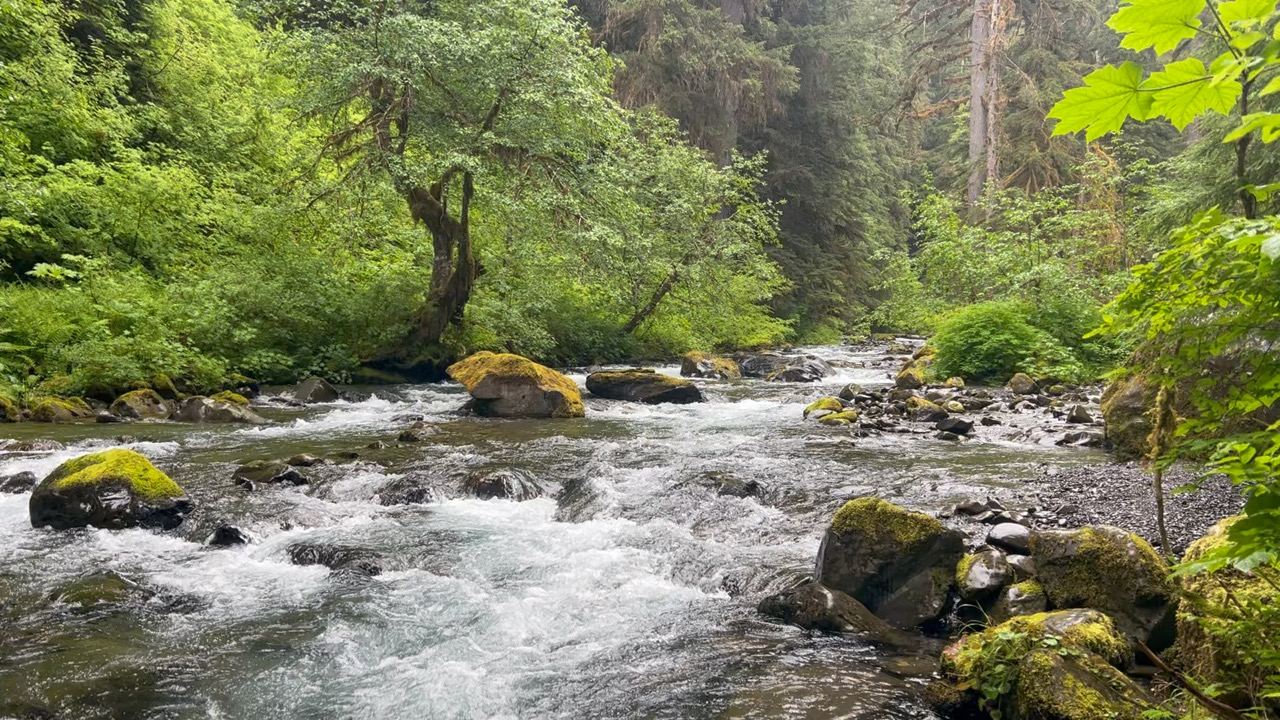
 Photo
PhotoHow we ended up here
This one was a family vacation, not a detour off a work trip.
We rented a house on Lake Sutherland, which sits just outside the park on the north side, and used it as a base for the week. Landon and Lily came. That changes what a trip looks like: you plan around whether everyone will still be talking to each other by the end of the day.
Five days, four of them with something in the park. It turned out to be the right amount, and not for the reason we expected.
One park, three landscapes
Here is the thing nobody tells you clearly enough. Olympic is not a place you drive into and look at. It is a peninsula with a mountain range in the middle, and the road goes around the outside. There is no road through it.
So the rainforest, the coast and the river valleys are all inside one boundary, and getting between any two of them takes real time. Our base was forty-five minutes from one and two hours from another. Nothing about that is a complaint. It just means you pick one thing a day and commit to it, rather than expecting to see the park the way you see a park with a loop road.
What you get in exchange is that no two days looked remotely alike.
 Photoassets/olympic-hoh-sign.jpeg
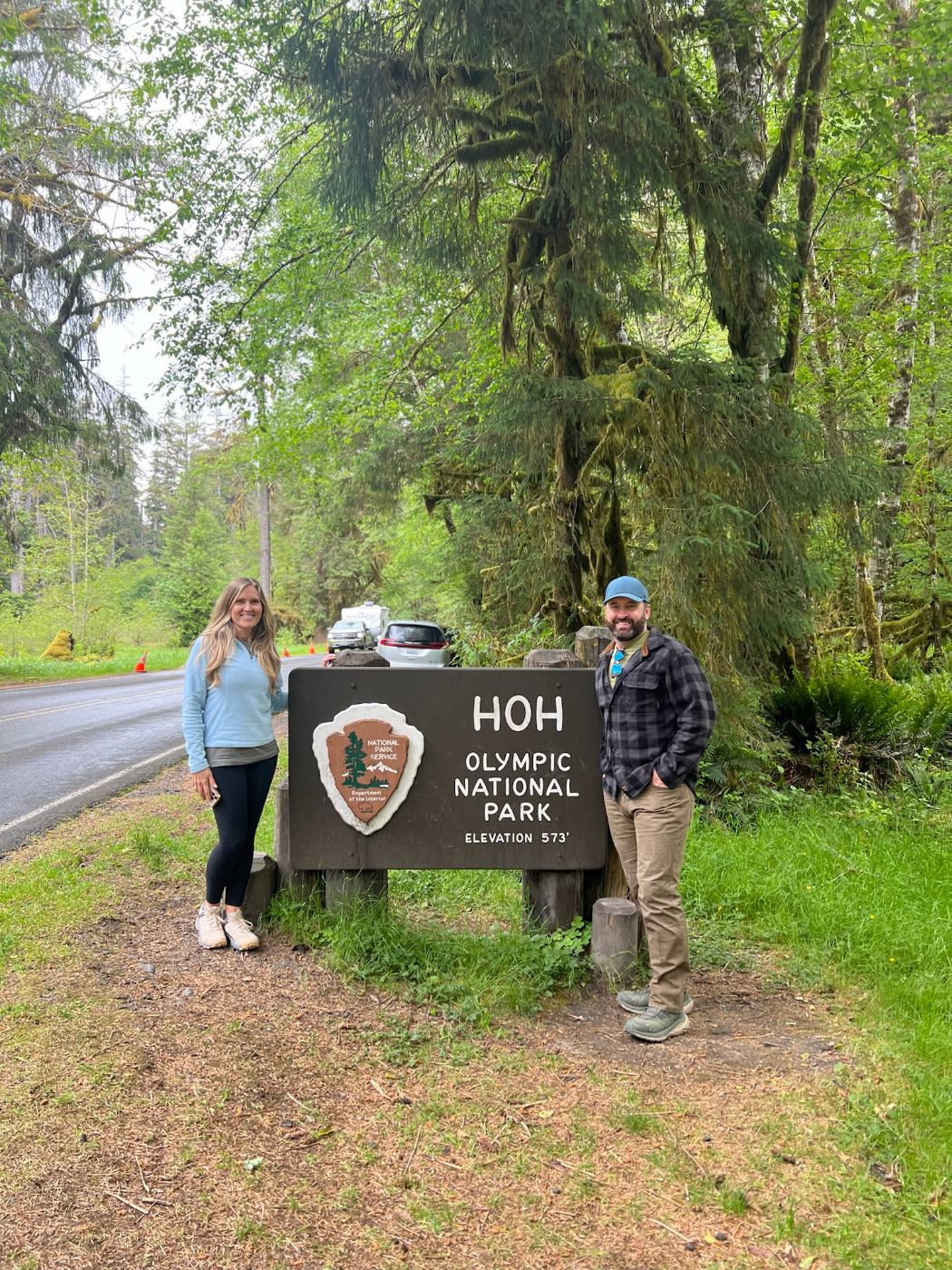
The Hoh
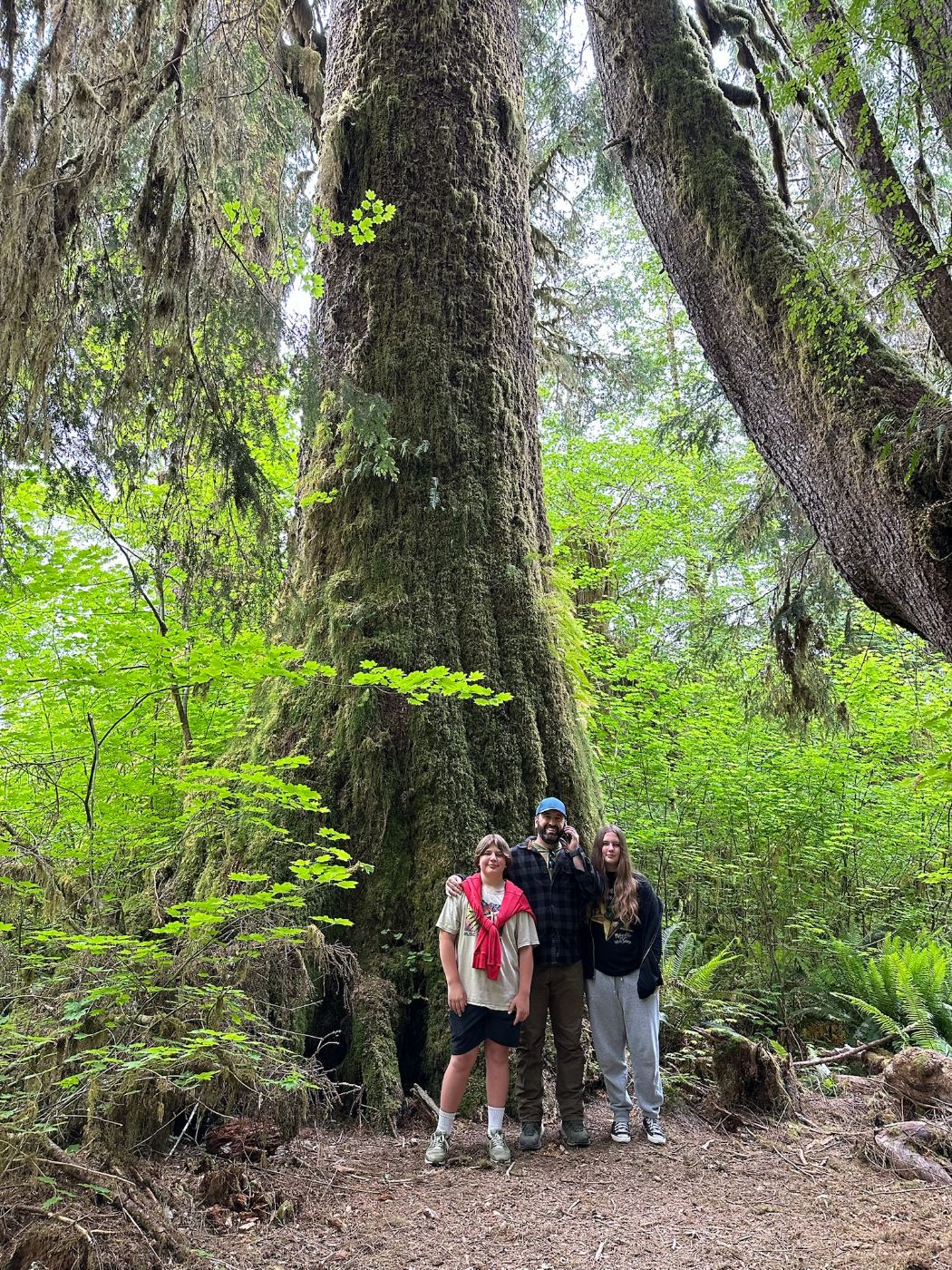
The rainforest is the one you came for, and it does not disappoint in the way you expect. You expect green. You get green, but the surprise is the weight of it: moss hanging off every branch in sheets, ferns to your waist, trunks going up past where you can comfortably look.
We walked one of the easy trails out of the Hoh with Landon and Lily. Flat, wide, no effort at all, and the scale arrives within about four minutes of leaving the car.
 Photoassets/olympic-big-tree.jpeg
The number that explains the whole forest
The Hoh takes somewhere between 140 and 170 inches of rain a year. That is twelve to fourteen feet. Stand at the bottom of a two-storey house, look at the roof, and that is roughly the depth of water that lands on this forest annually.
And the moss is not doing what it looks like it is doing. It is epiphytic, not parasitic: it lives on the trees rather than off them, taking water and nutrients out of the air rather than out of the trunk it is sitting on.
Figures as reported by the National Park Service and consistent across The Mountaineers.
That second part changed how the place looked to us. Walking in, every tree reads as something being slowly strangled, buried under a load it did not ask for. It is not. The tree is fine. It is just wearing it.
Which is a much better forest to be standing in.
What we actually did
All of it was easy. That is worth saying plainly, because photographs of this park make it look like a place that demands something from you, and the parts we saw did not.
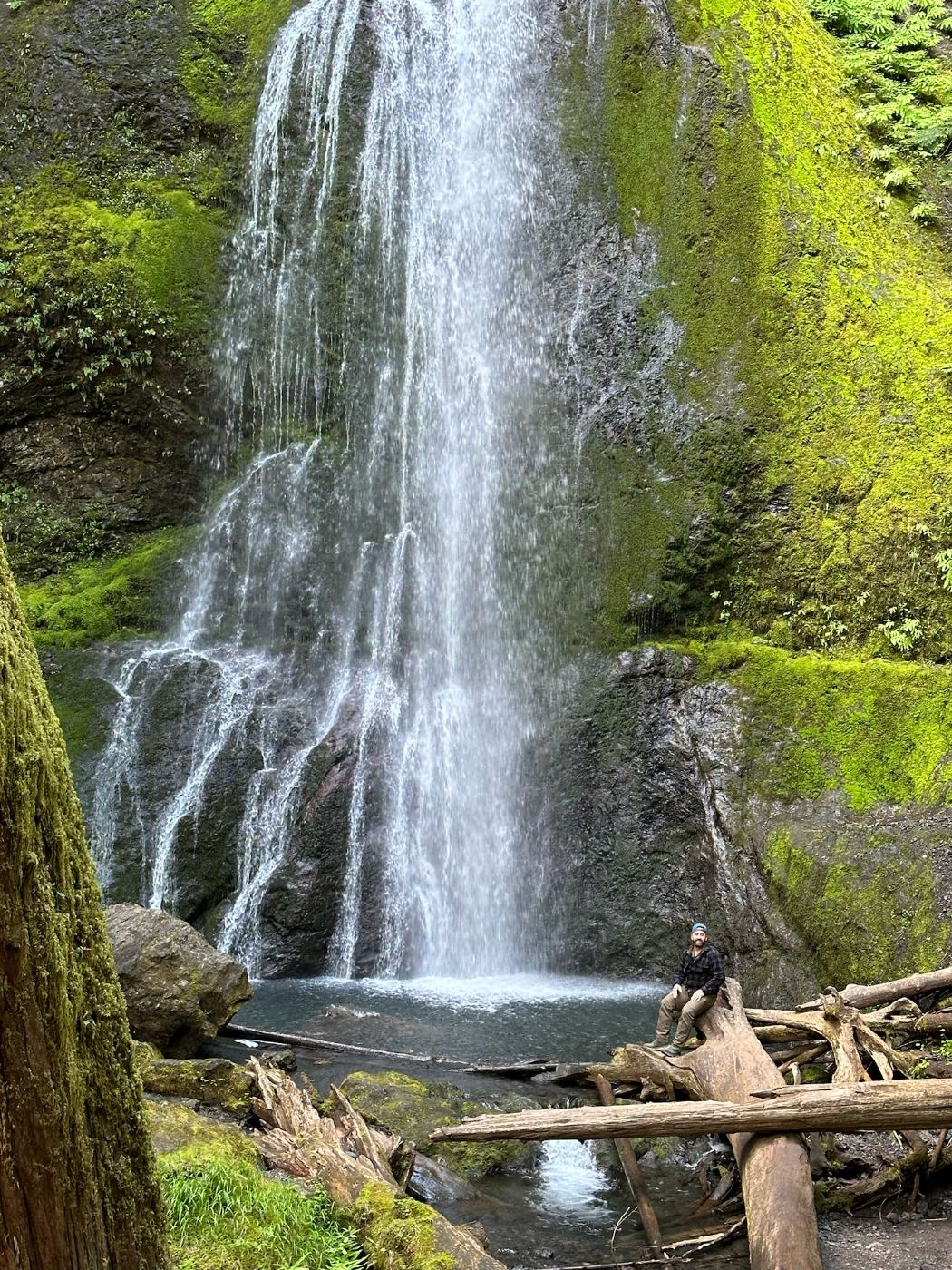
We walked to Marymere Falls the first morning, ten minutes from the house. Short, shaded, and the falls arrive suddenly at the end of it, tall and thin off a mossy wall with a jumble of dead timber at the bottom to sit on.
 Photoassets/olympic-marymere.jpeg
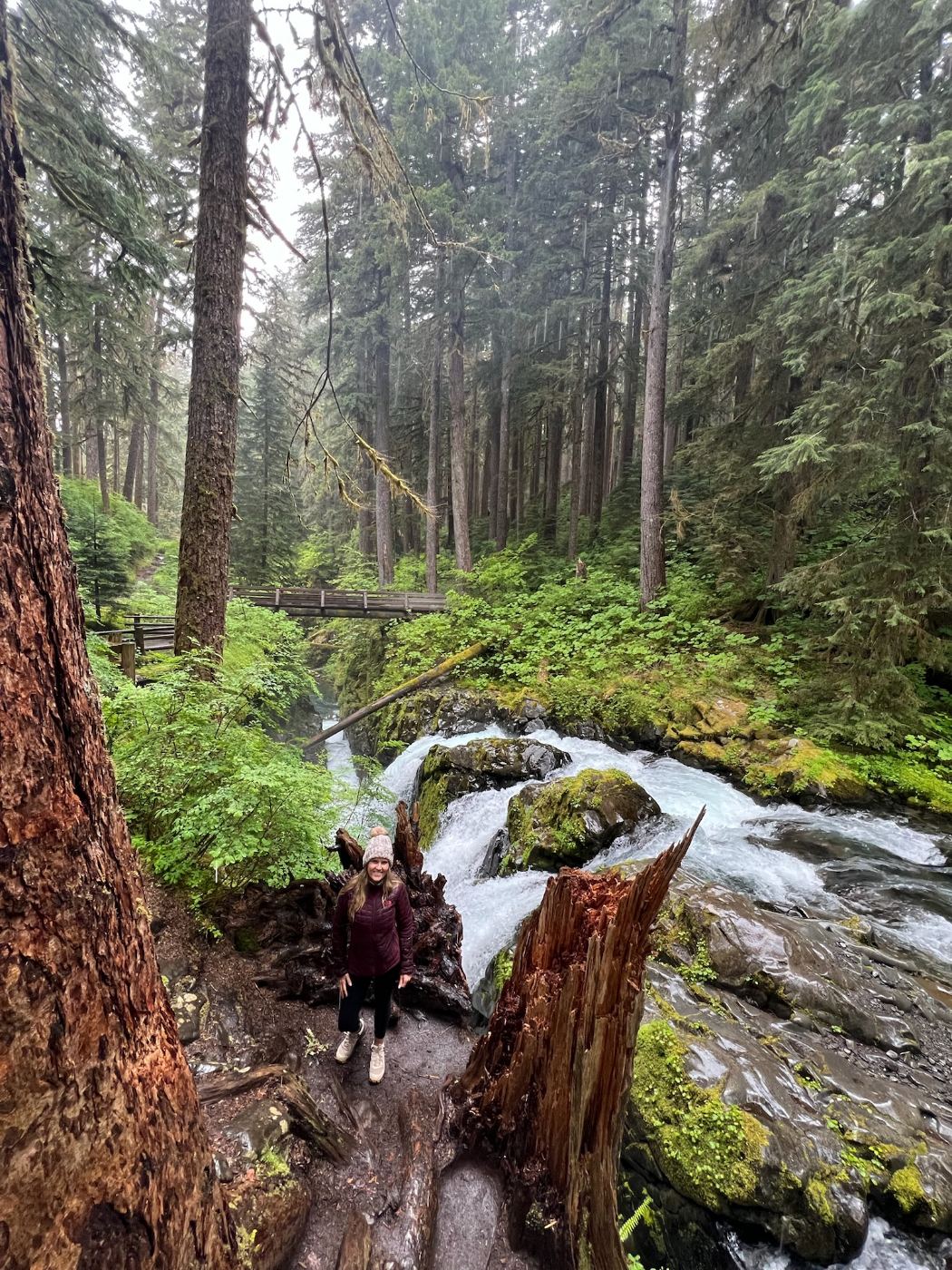
Later in the week we did Sol Duc Falls, which is the other direction and the better walk of the two: old growth the whole way, and the river running hard enough alongside you that you stop talking.
 Photoassets/olympic-sol-duc.jpeg
The coast, which is also the park
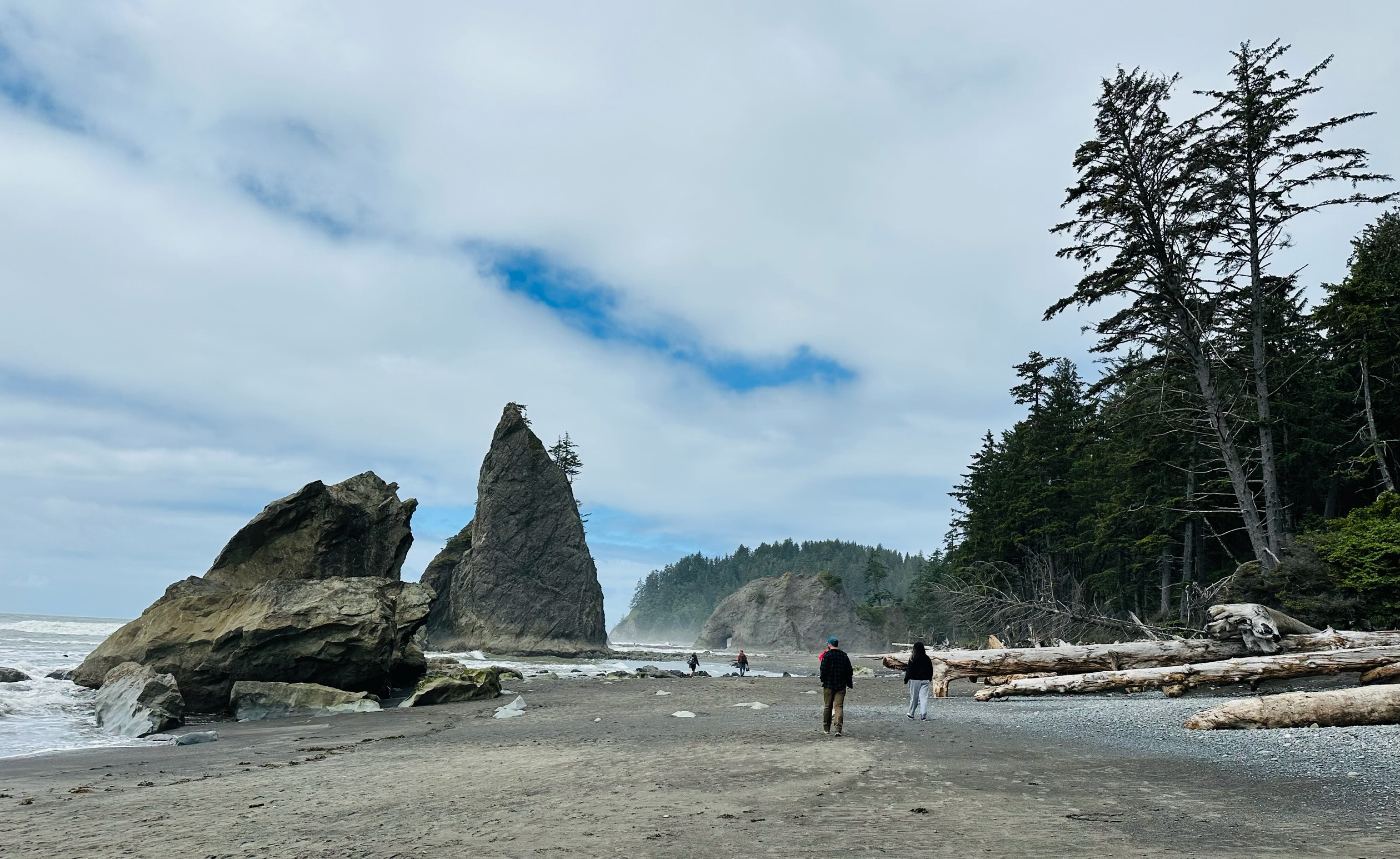
The same day we were in the Hoh, we drove out to the ocean. Same park. A little over an hour of driving, and the landscape swaps out completely: rainforest to grey Pacific, sea stacks standing offshore, and drift logs the size of the trees we had been standing under that morning, because that is exactly what they are.
We walked up the beach to Hole-in-the-Wall, the arch cut through the headland about a mile and a half north of where you park.
 Photoassets/olympic-rialto.jpeg
The part that is not a scenic detail
You cannot walk to Hole-in-the-Wall whenever you feel like it. The route around the headland only exists at low tide. The usual guidance is to be there from about two hours before low tide until roughly half an hour after, and to skip it if the tide is running much above six feet, because above that the water is against the cliff and there is no beach to walk on.
Get it wrong and the sea closes the door behind you. People have been trapped between the rock and the water on this coast, and people have died doing it.
Tide guidance per Olympic National Park visitor guidance and the Hole-in-the-Wall trail listing. Check a NOAA tide table for the day before you go.
It is a strange thing to hold in your head on a beach that looks this peaceful. The tide chart is not a nice-to-have here. It is the whole plan.
The verdict
One-Time Visit
Went, saw all three, came home full.
Olympic gives you more variety than any park we have been to. Rainforest, coast and river valleys in one week, and you genuinely cannot confuse one day with another. That is rare, and it is the reason to go.
It is also why one visit does the job. The park is not asking you to come back and go deeper, the way a place with one great trail does. It is asking you to come once and see the range, and a week is enough to do that properly. We drove a lot, we walked easy trails, we saw the three faces of it, and there was no nagging list of things left undone when we got in the car.
Go for a week, not a weekend. Stay somewhere on the north side and accept the driving as the price of admission. Do the Hoh and the coast on the same day at least once, because the whiplash between them is the single best thing this park does.
Then check the box and go find the next one.