 Photo

How we ended up here
Maui in February, which turns out to be the single best month to pick.
We went for the island. The national park came with it, the way it usually does for us, and we gave it an afternoon.
February is when the humpbacks are here. That part was not an accident, and it ended up mattering more than anything on the mountain did.
The drive up
You do not hike Haleakalā to see it. You drive it. The road climbs from sea level to ten thousand feet in about two hours, and it does it by switchbacking up the outside of a volcano with very little between you and the drop.
If you do not like mountain roads, this is a white knuckle drive. There is no way around that and no point pretending otherwise. It is paved, it is well maintained, and it is still a long way up with a lot of corners. Trisha and I have done plenty of these. This one gets your attention.
 Photoassets/haleakala-sign.jpeg
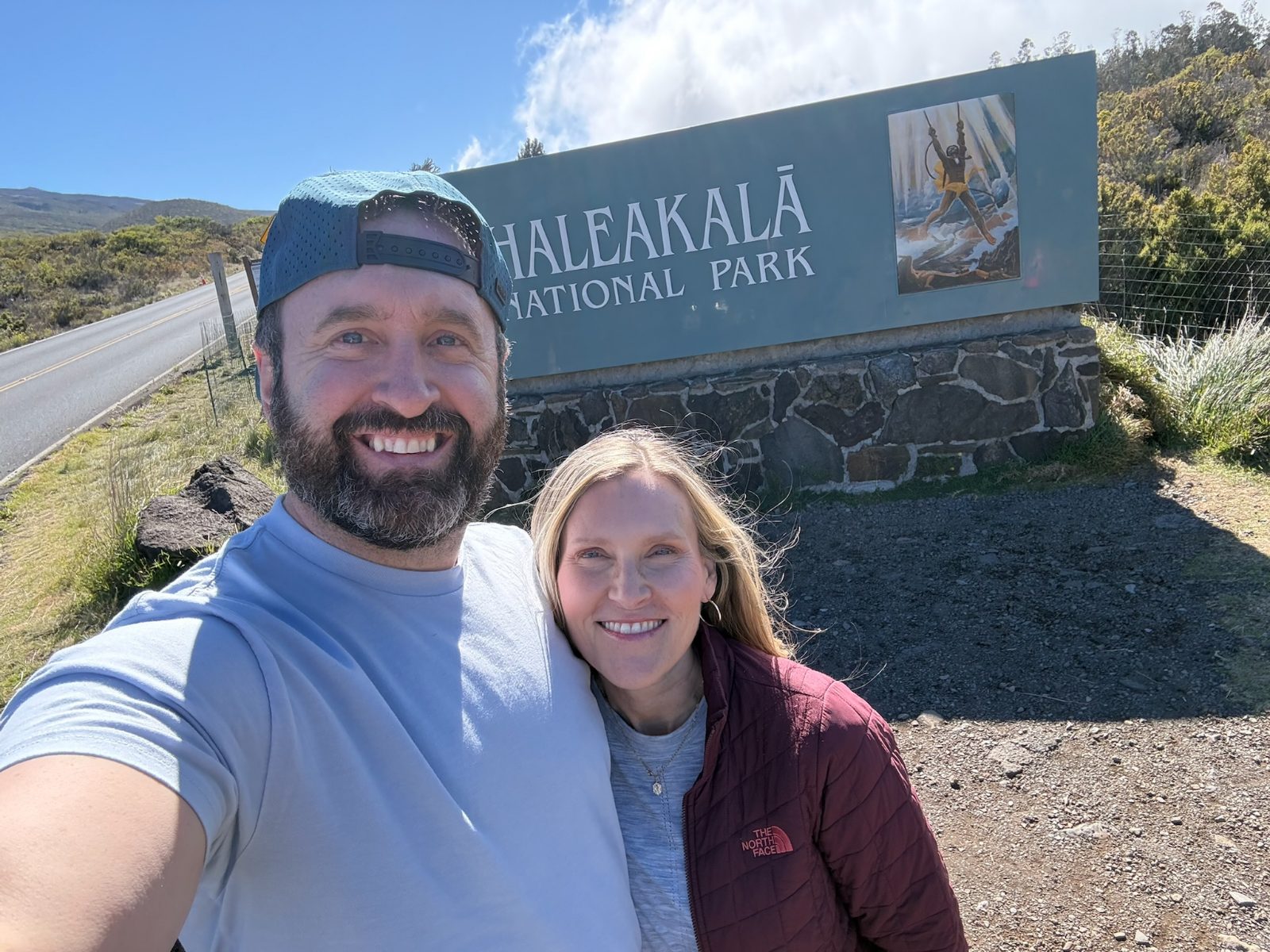
The name means house of the sun. The story is that the demigod Māui stood up here and lassoed the sun to slow it down so his mother would have longer days to dry her kapa cloth. It is painted right there on the park sign, which is a better welcome than most parks manage.
The top
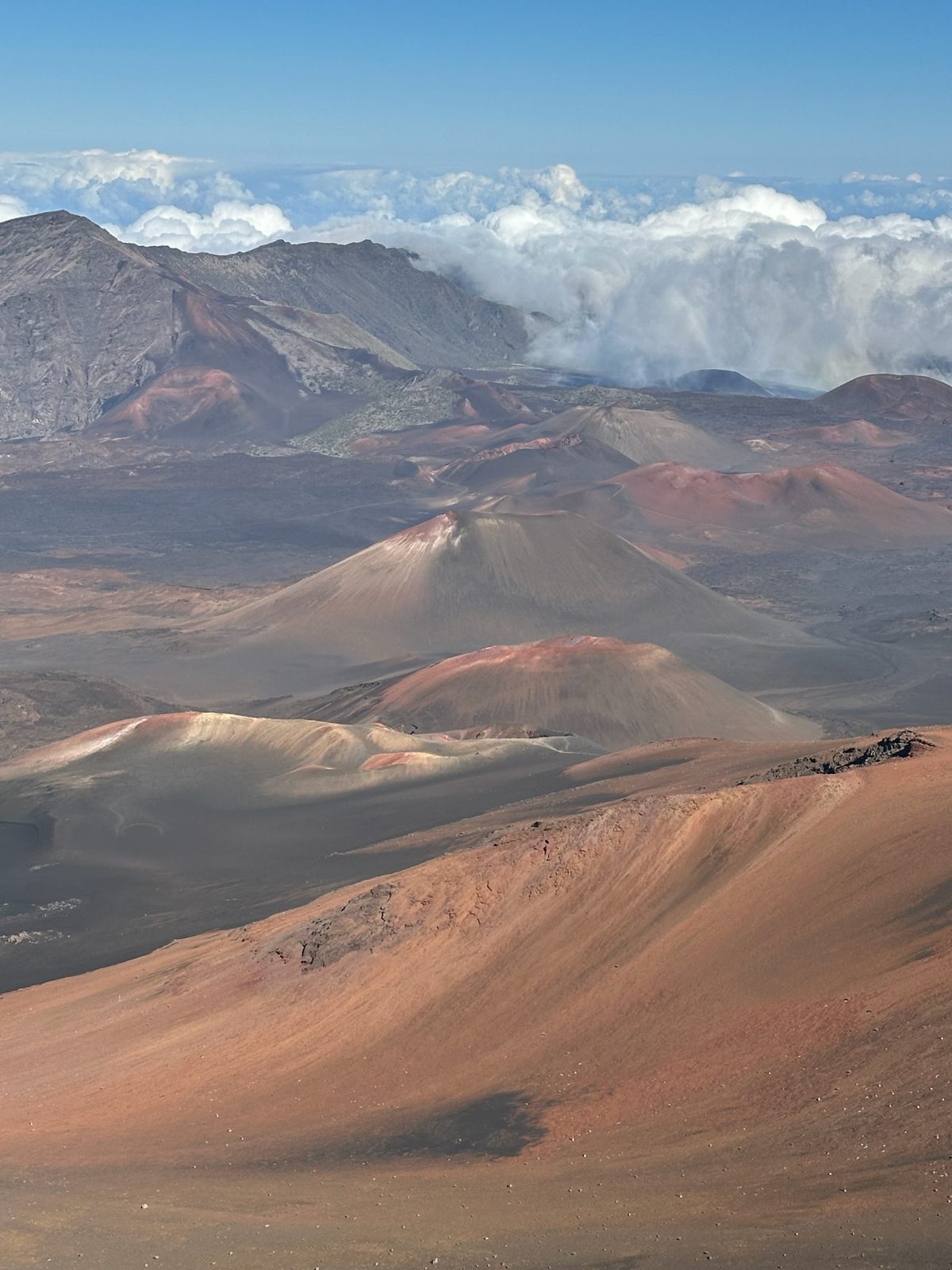
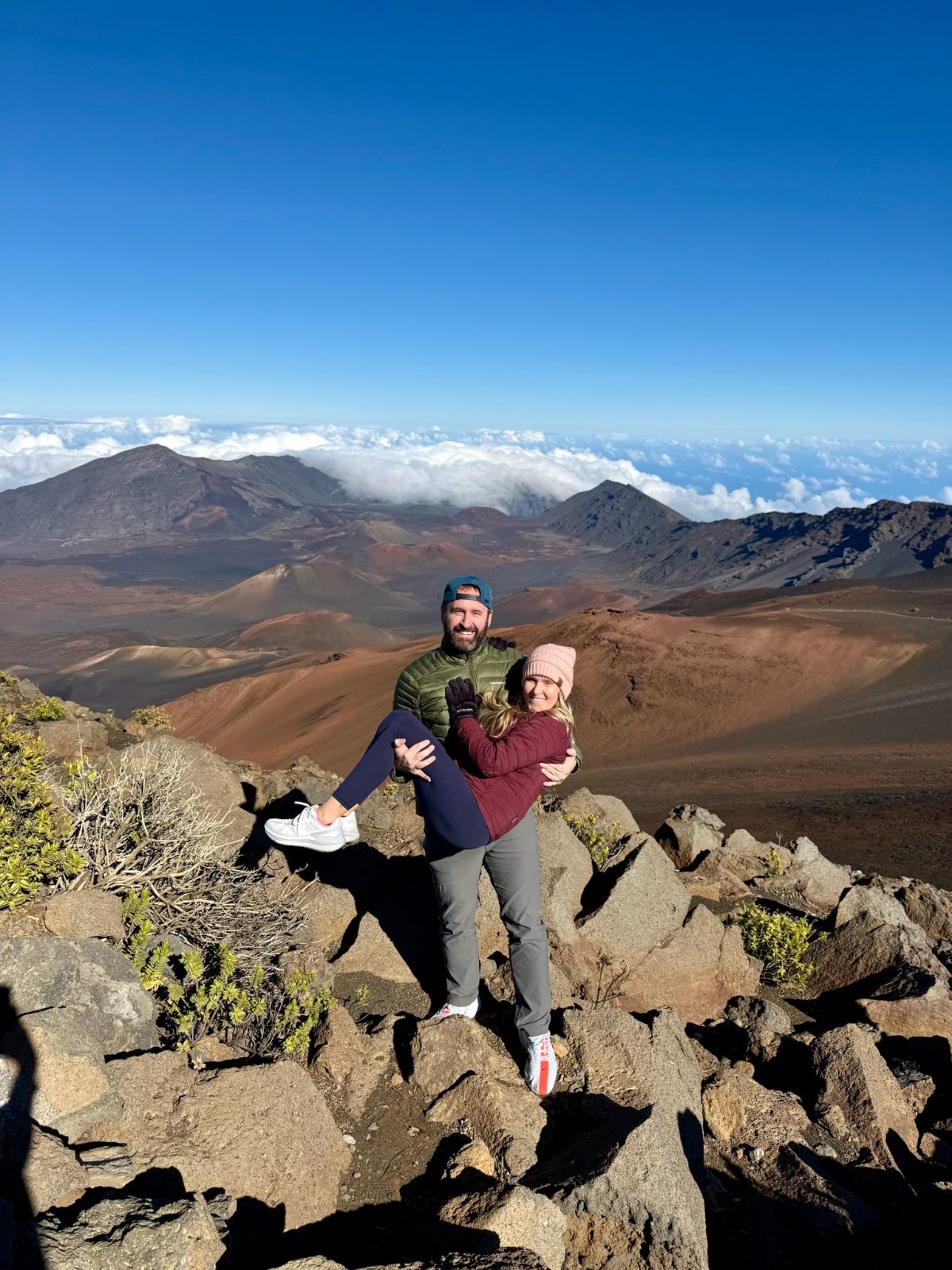
We made it up, and then the thing happens that no photograph gets across: you are above the clouds. Not near them. Above them, looking down on a solid white floor with the sun still on you.
And on the other side of the railing, the crater. Red and grey cinder cones the size of hills, laid out across a floor that goes on for miles, all of it the colour of rust and ash.
 Photoassets/haleakala-summit.jpeg
Bring a jacket. We were in Hawaii, and at the top we were in beanies and gloves.
The plant that waits ninety years, flowers once, and dies
The cinder slopes up here grow a plant called the ʻāhinahina, the Haleakalā silversword. It is a silver rosette that looks engineered rather than grown, and it lives nowhere else on earth, only on this mountain.
It can live decades before it does anything, some of them forty to ninety years, sitting on bare cinder at ten thousand feet. Then, once, it sends up a stalk of hundreds of purple flowers. Then it sheds its seed and dies. One bloom, one time, and that is the whole life.
Per the National Park Service and HAWAIʻI Magazine.
That reframes the view. What looks like a dead red moonscape with a few silver weeds on it is actually a place where some of those weeds have been sitting there, doing nothing visible, since before you were born, waiting for their one go at it.
Nobody is going to see most of them flower. That is rather the point.
The verdict, part one
One-Time Visit
Haleakalā gave us everything it had in an afternoon.
Drive up, come out above the weather, look at the crater, read about the silversword, drive down. That is the park from the summit, and it is genuinely worth the road to get it.
We are not itching to go back up. One afternoon above the clouds was the complete experience, and One-Time Visit is the compliment it sounds like when the thing delivers in full the first time.
But Maui is a different answer
Here is where this post stops being about a national park.
We rate parks. This is the first time the park and the place it sits in have not got the same rating, and it is not close. The mountain was an afternoon. The island we are going back for.
Over the top of a whale
February is calving season. The humpbacks come to Maui because the water here is warm enough and calm enough for a newborn, and they arrive in numbers.
We got out on the water early and kayaked out over them. Not near them. Directly over them, looking down at something enormous holding a few feet under the hull, waiting to come up.
 Photoassets/maui-dawn.jpeg
She has not eaten since she left Alaska
The humpbacks in that channel swam roughly three thousand miles to get here from Alaska, a trip that takes them six to eight weeks.
And the mothers do not eat the entire time they are in Hawaii. There is no food for them here. They run on their own blubber, converting it straight into milk, and a nursing mother can lose up to a third of her body weight before she makes the trip back north.
Her calf, meanwhile, can put on up to a hundred pounds a day. Around 80 percent of all the mother and calf pairs in Hawaii choose the ʻAuʻau Channel, the stretch between Maui and Lānaʻi, because it is calm enough to nurse in.
Per Hawaii Wildlife Fund, Trilogy and Hawaii Ocean Rafting.
Sit with that while you are floating on top of one. The animal under your boat swam the length of the west coast, has not had a meal in months, is burning her own body to feed something that is gaining a hundred pounds a day, and will then swim three thousand miles back to finally eat.
She is not resting. She is working.
The Road to Hana
Everybody tells you to do it. Everybody is right. It is a long day of narrow road, one lane bridges and blind corners, and the entire point is what you stop for.
- Download the audio tour before you leave. We used Shaka Guide. It is GPS triggered, it works offline, and offline matters because the cell service out there does not.
- Stop at Aunty Sandy's for the banana bread on the Keʻanae Peninsula, just off the highway around mile marker 16. It opens at 8:30 and it regularly sells out before noon, so go early rather than on the way back.
- Book Waiʻānapanapa in advance. More on that below, because it will stop your day if you do not.
- Then the huli huli chicken off the side of the road, the waterfalls, and the black sand.
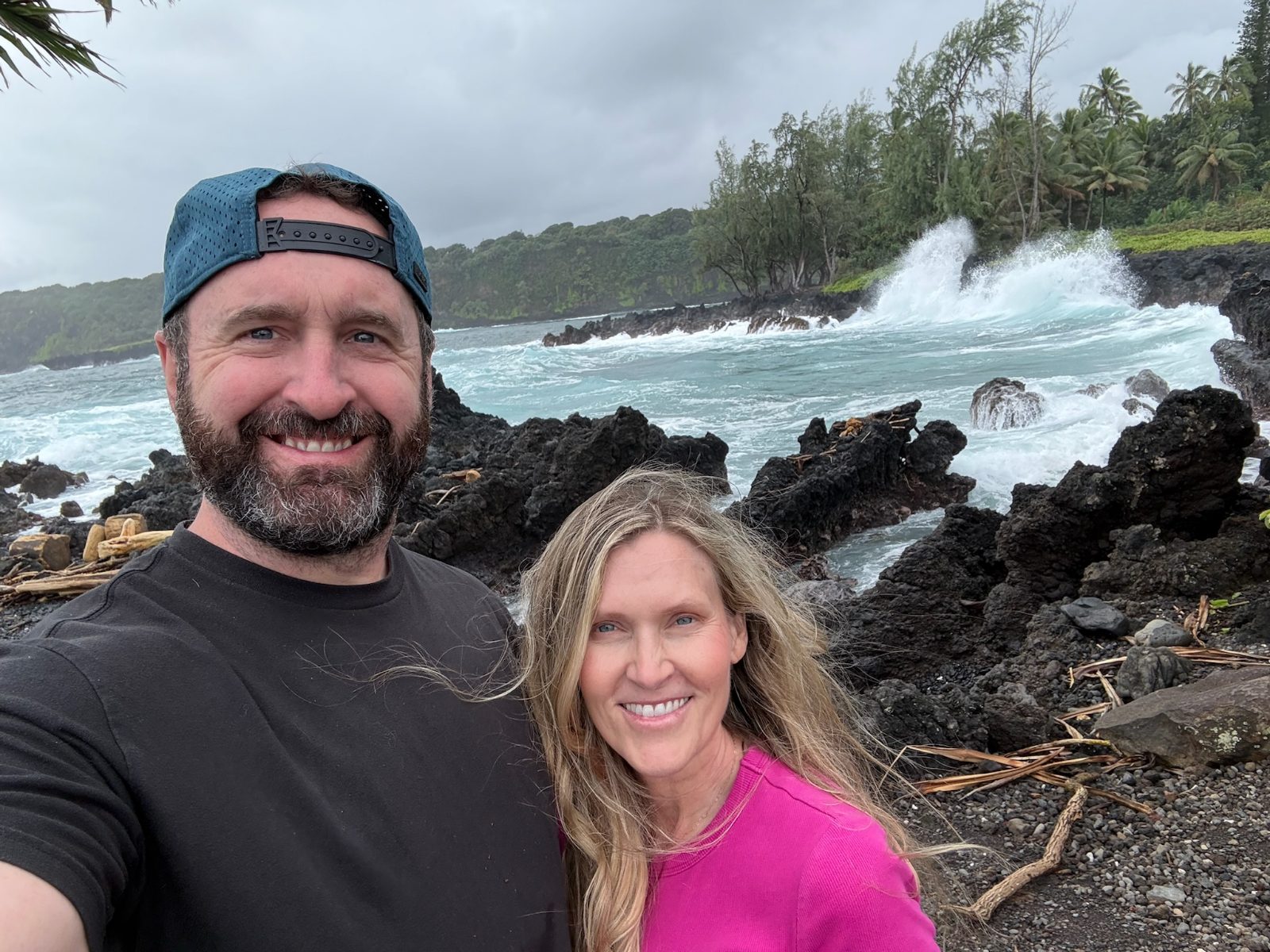 Photoassets/maui-keanae.jpeg
Then the waterfalls start, and they do not really stop. Some are a pull-out and a fifty foot walk. Some you see from the bridge as you cross it.
Upper Waikani, just past mile marker 19, is the one everybody calls Three Bears, because normally it comes down in three parallel drops of descending size. Papa, Mama and Baby, left to right.
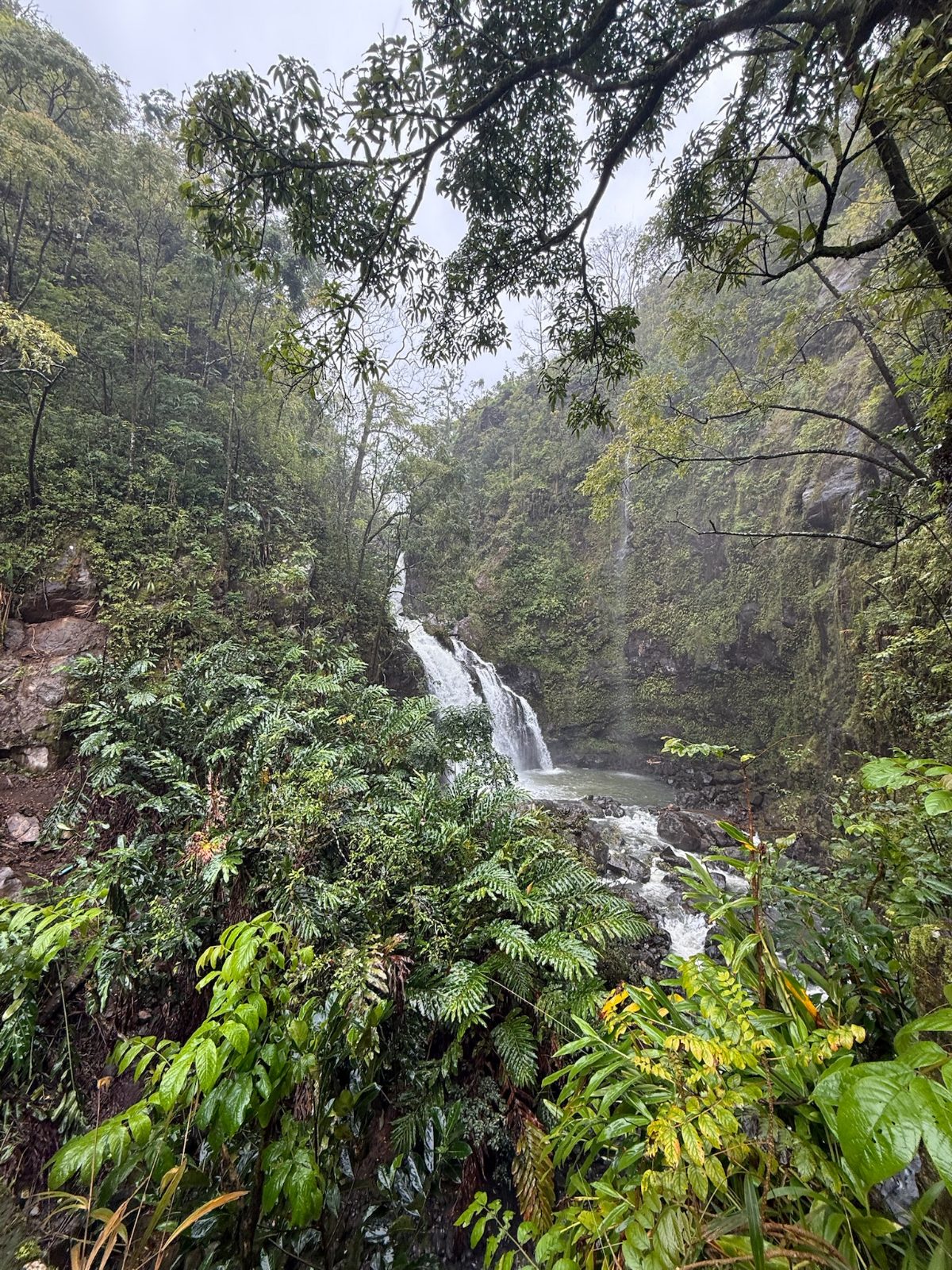 Photoassets/maui-waterfall.jpeg
We did not get three. It had been raining, and when it rains the separate streams run together into one heavier fall, which is what you are looking at. Worth knowing before you pull over and start counting.
And then Waiʻānapanapa, which is the black sand beach, and which is the one stop on this road you cannot improvise.
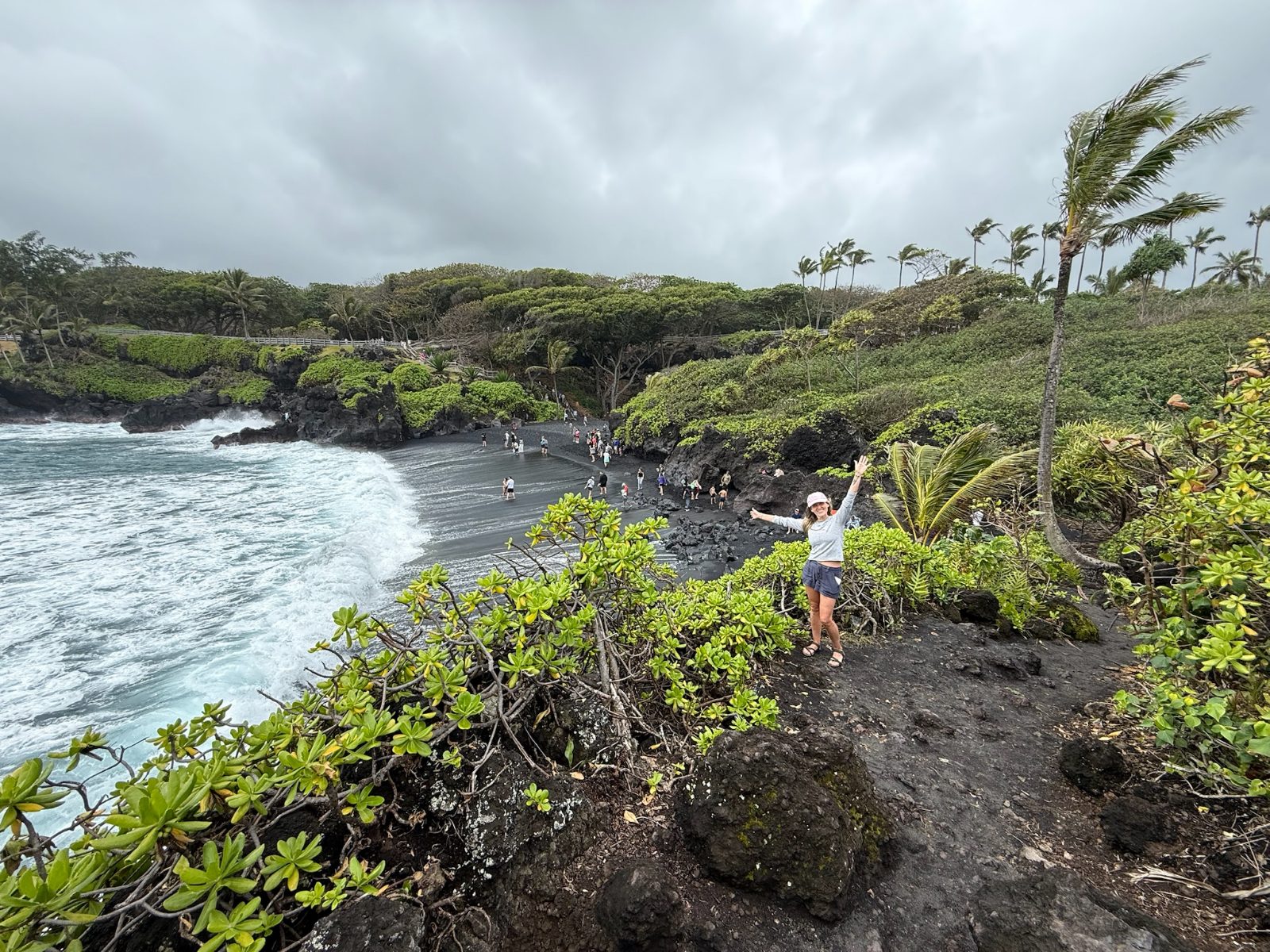 Photoassets/maui-black-sand.jpeg
Non-residents need a reservation. You book a time slot up to 30 days ahead at gowaianapanapa.com, there are four slots a day, and there are no walk-ins and no same-day bookings. Turn up within the first 30 minutes of your slot or you can be turned away. It is about ten dollars for the car and five a head. We had the ten o'clock.
And then at one of the many waterfalls that are simply sitting there on the side of the road, there was a pool at the bottom, and I made a decision.
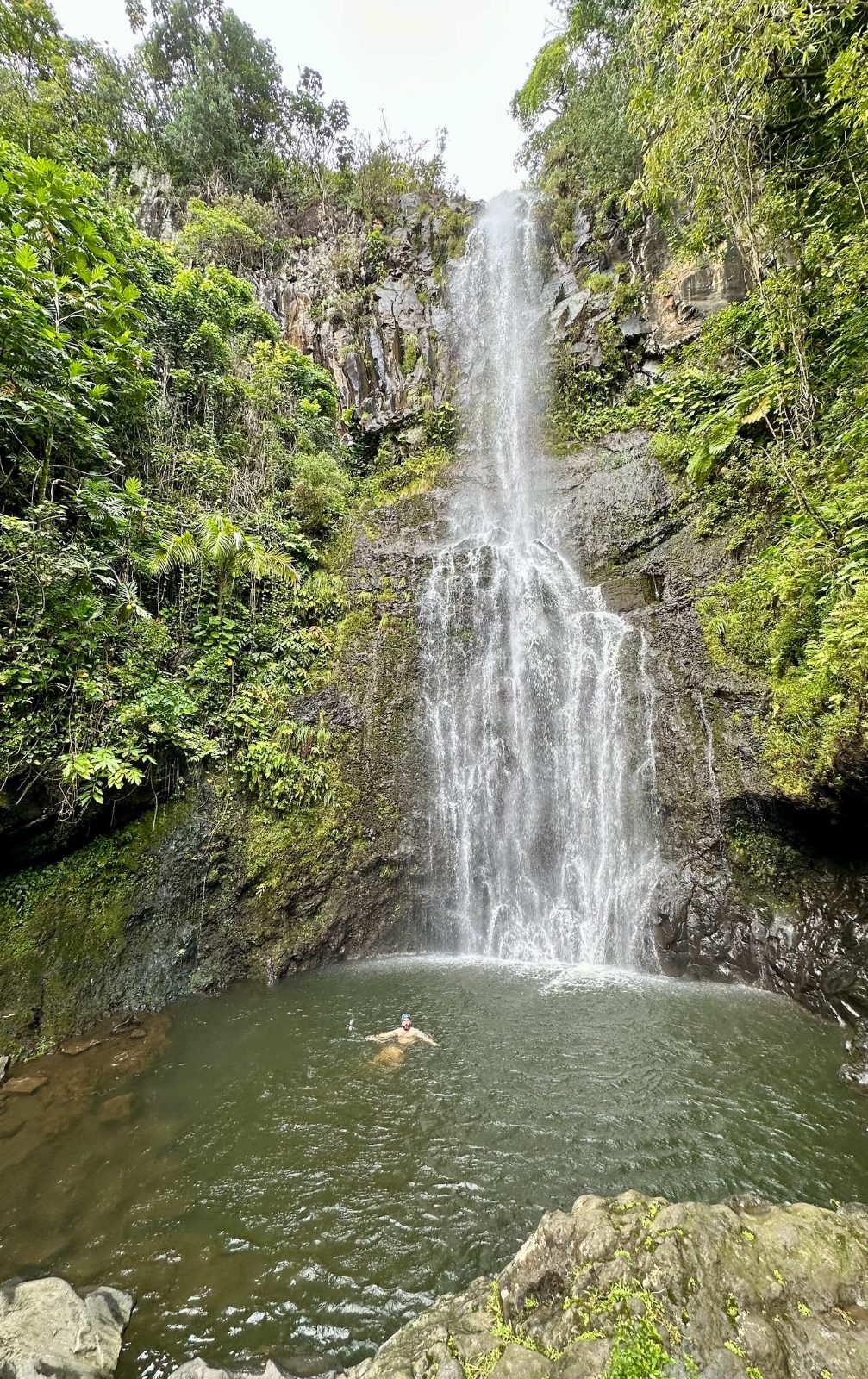 Photoassets/maui-swim.jpeg
Get in. You drove all that way.
And then the sky does something
The last thing, and the thing I did not expect to be writing about, is the light.
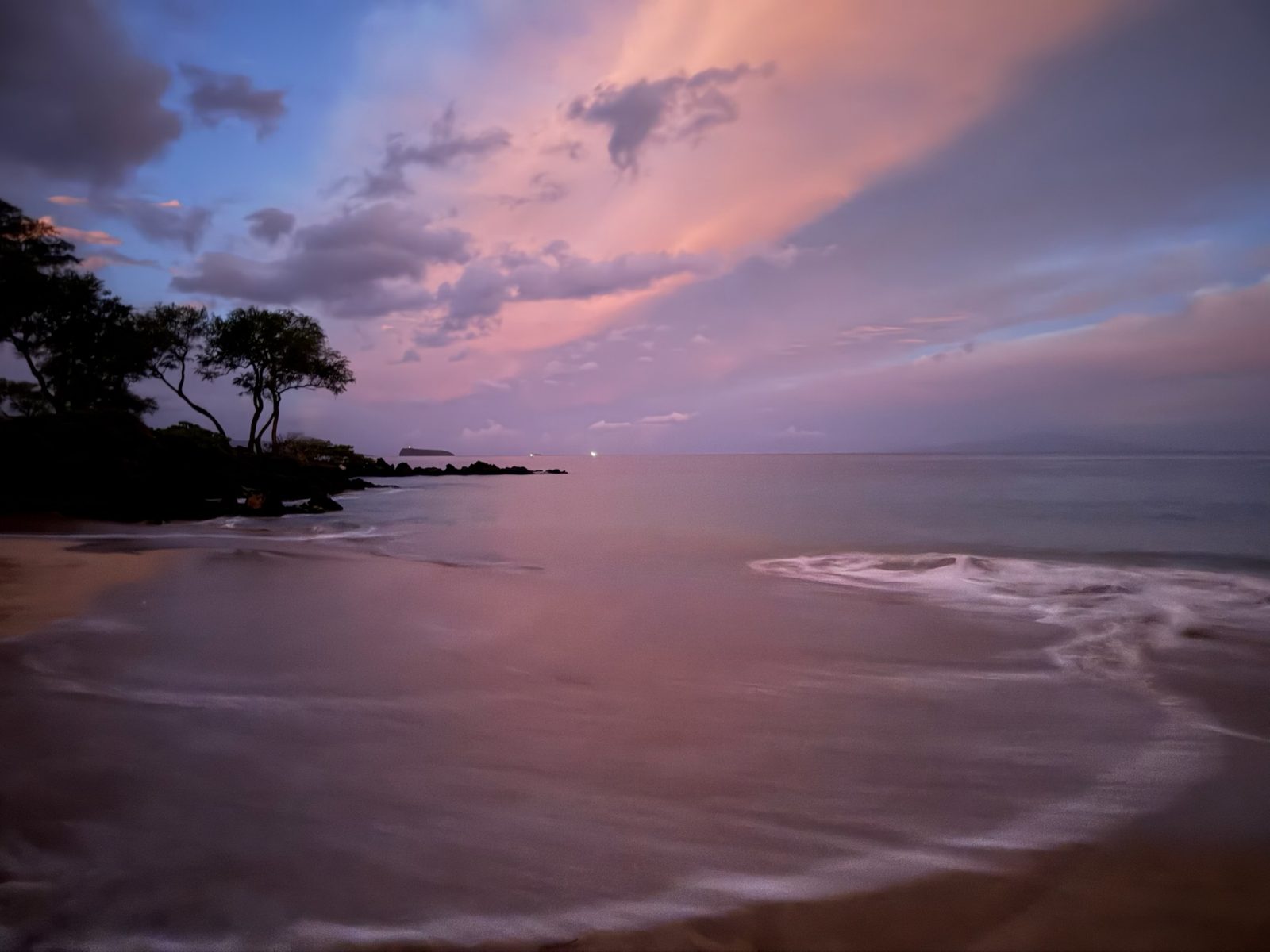
Maui skies are not like other skies. Morning and evening both, the whole sky goes to work, and it does it most days rather than as a special occasion. We have been plenty of scenic places. We have not seen colour like that anywhere else.
The verdict, part two
Go Back
Maui, we are not finished with you.
This is the first post where the park and the island have landed on different ratings, and it is the honest answer. Haleakalā was a complete afternoon. Maui is a place with more left in it than we could get through.
The whales are only there part of the year, so that alone sets a window. The Road to Hana has more stops than one day holds. There is a whole side of the island we never touched, and a summit sunrise we did not get up for.
Go in February if you can. Book the black sand beach before you fly. Download the audio tour at the hotel while you still have wifi. Drive the mountain even if the road scares you, because it is two hours and you will be above the clouds at the end of it.
Then get in the water.