 Photo

How we ended up here
This one was not planned in any sense of the word.
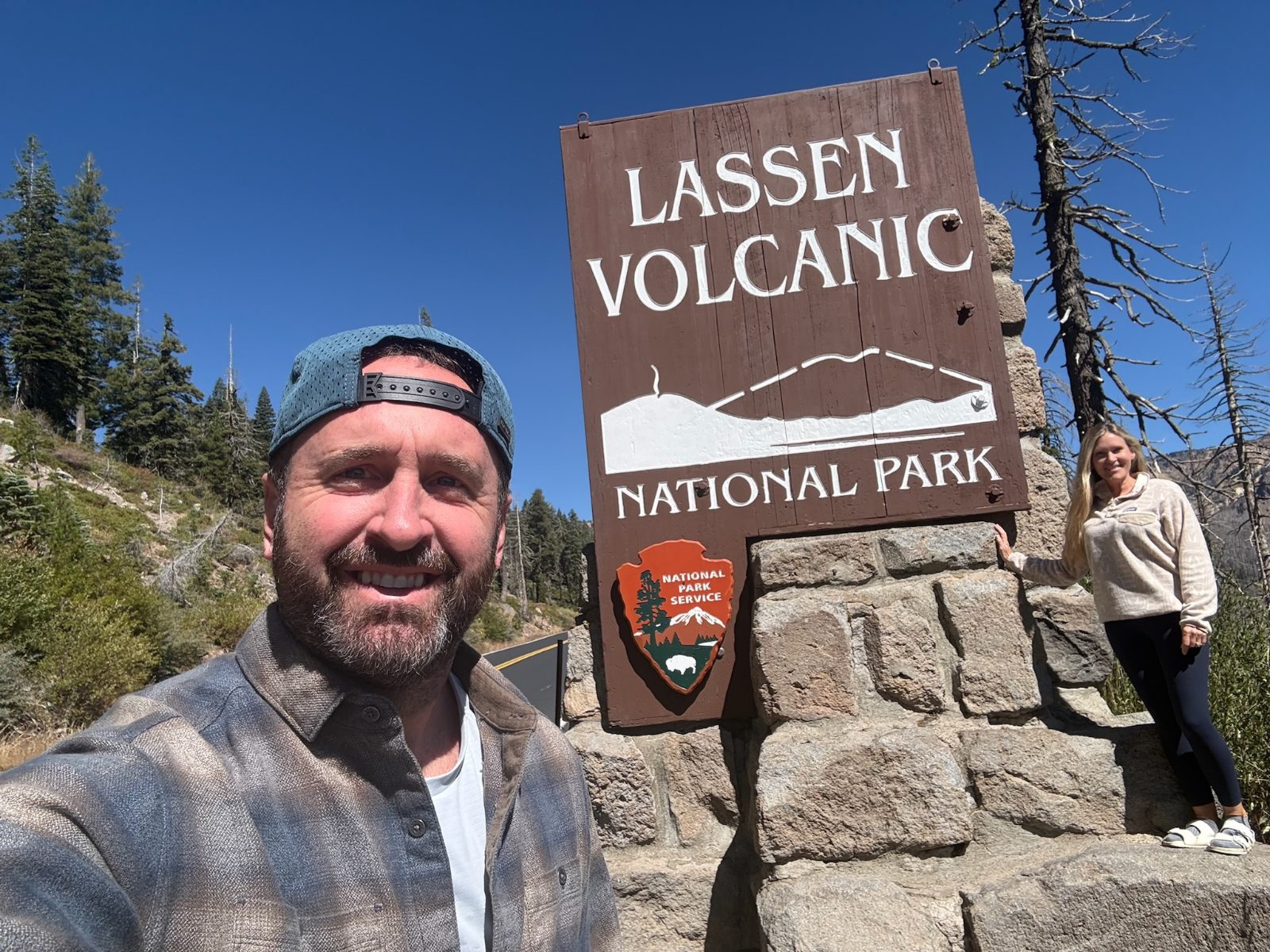
Labor Day, 2026. Six in the morning. I asked Trisha whether she felt like getting in the car for about seven hours so we could go and see a national park, and she said yes, and we left.
That is the whole origin story, and honestly it is the best one we have. No itinerary, no reservation, no packing list. Fourteen hours of driving to spend an afternoon somewhere neither of us had ever been.
She said yes. That is the part worth writing down.
 Photoassets/lassen-sign.jpeg
One park, four volcanoes
We came in through the southwest entrance and did the thing we always do, which is go inside the visitor center first. Ten minutes in there changes what the rest of the day looks like.
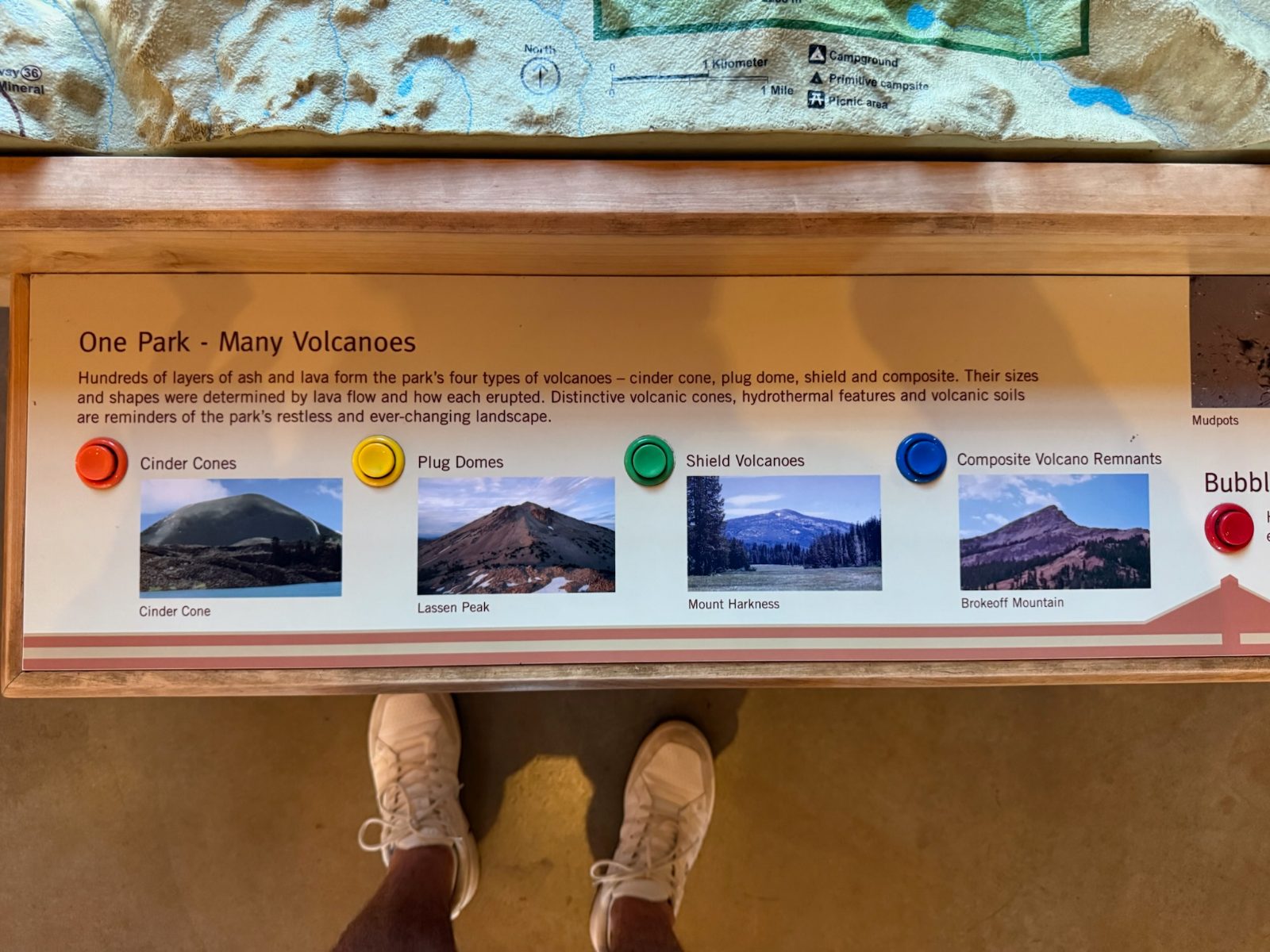
In this case it changed it completely, because of one exhibit with four buttons on it.
 Photoassets/lassen-four-volcanoes.jpeg
There are four kinds of volcano on earth, and all four are here
Geologists sort volcanoes into four types: cinder cone, plug dome, shield and composite. That is the whole taxonomy. Every volcano on the planet is one of those four.
Lassen Volcanic is the only national park that has all four inside its boundary. The park's own exhibit names them: Cinder Cone is the cinder cone, Lassen Peak is the plug dome, Mount Harkness is the shield, and Brokeoff Mountain is what is left of a composite volcano.
Lassen Peak, the one the park is named for, is also the largest plug dome volcano in the world, and at 10,457 feet it is the high point of the park. It erupted in the 1910s, which makes it one of only two volcanoes in the lower 48 to have erupted in the twentieth century.
Four-type figures from the park's own visitor center exhibit, corroborated by the National Park Service and the USGS.
I did not know that. I have stood on plenty of mountains without once wondering what category they belonged to. But once you have read it, the drive through this park stops being scenery and turns into a set of worked examples, and you start looking at every lump on the horizon trying to work out which of the four it is.
That is the whole reason to go inside the building.
Bumpass Hell
Then you drive up. The park highway climbs to about eight thousand feet, and the pull-out you want is signed for Bumpass Hell.
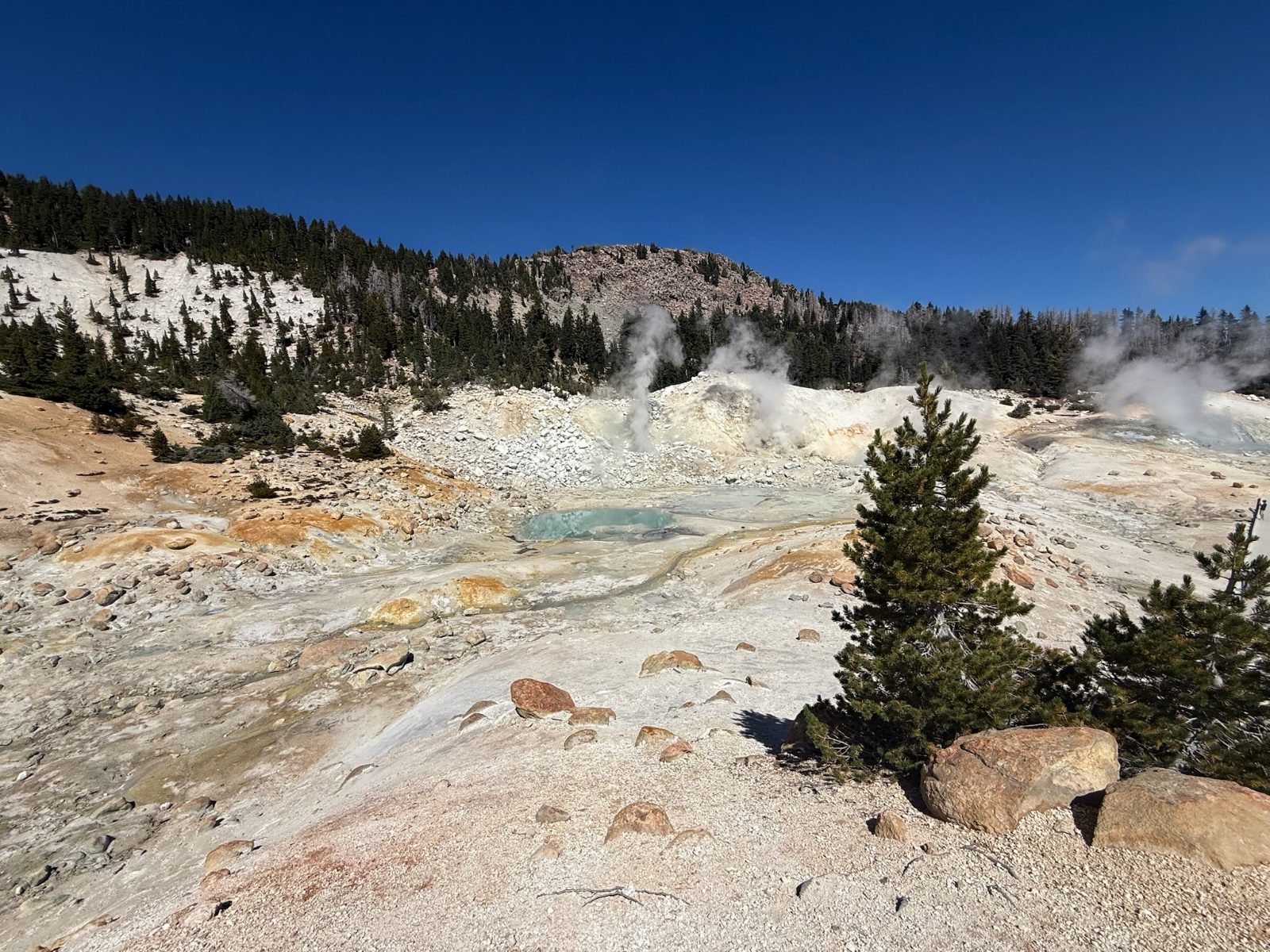
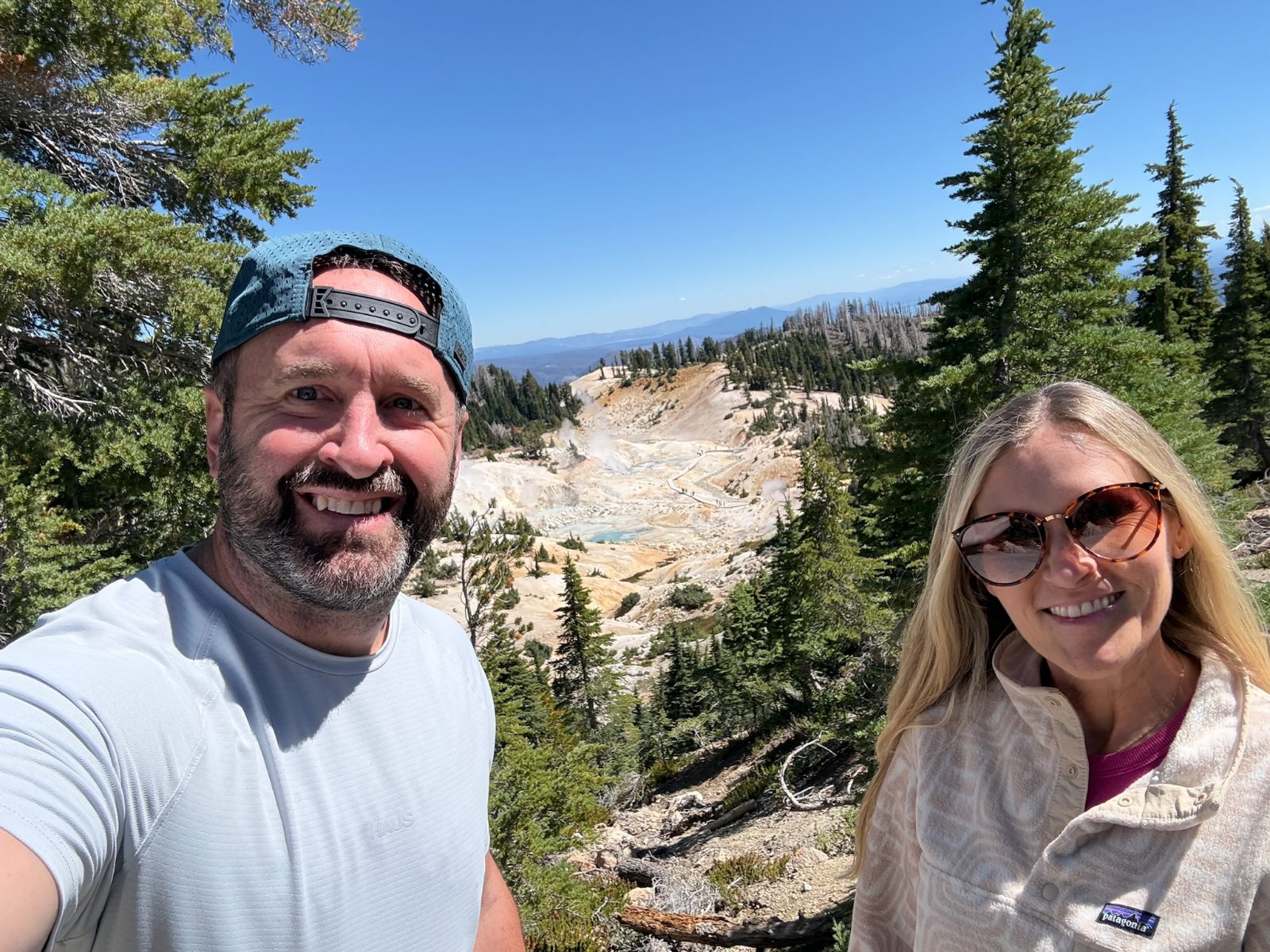
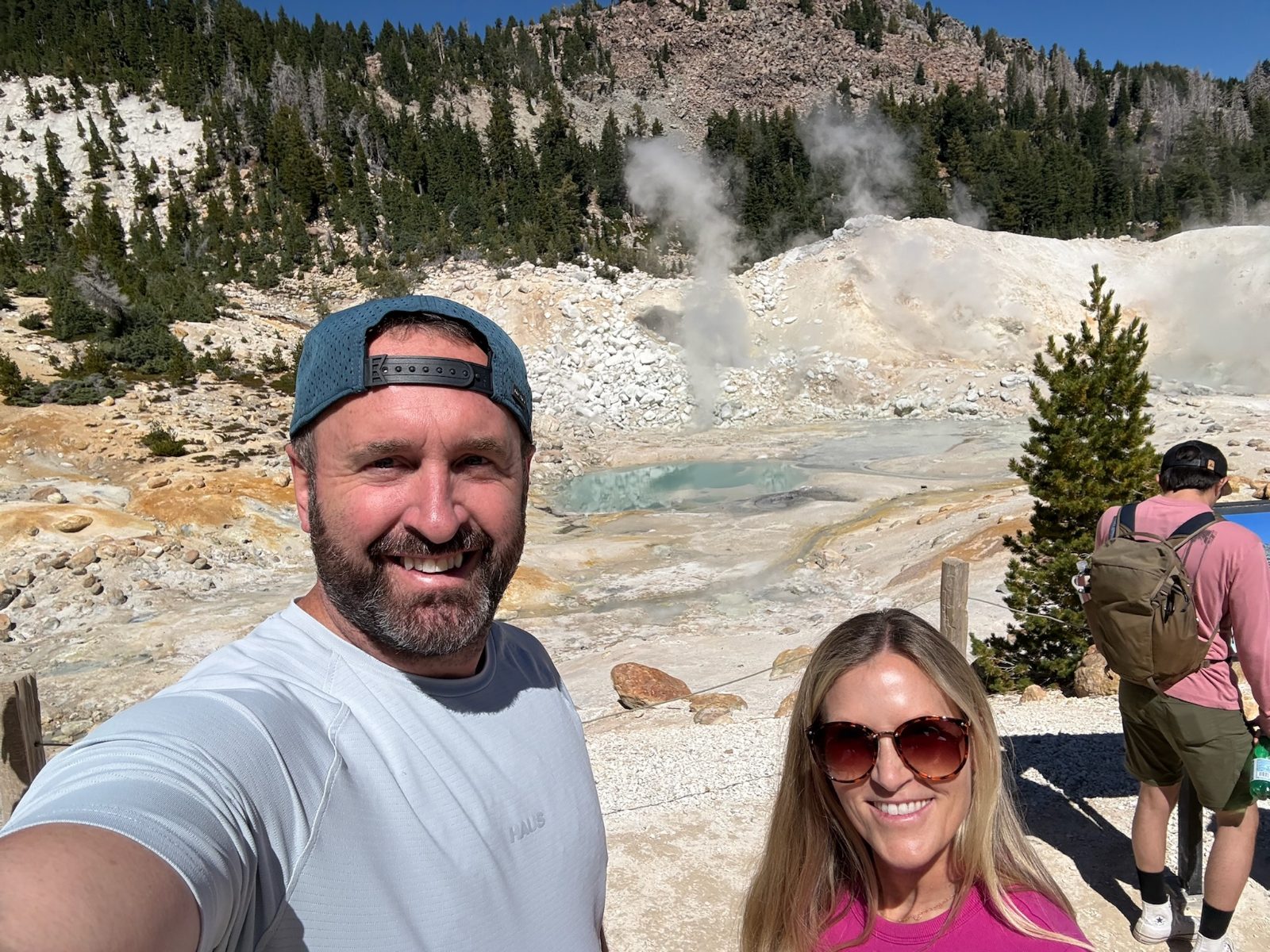
You walk in, and after a while the trail tops out and you are looking down into a basin that does not match anything around it. Everything else up there is granite and pine. This is bleached white and yellow, with steam coming out of it in half a dozen places at once, and a pool in the middle of it the colour of a swimming pool.
 Photoassets/lassen-overlook.jpeg
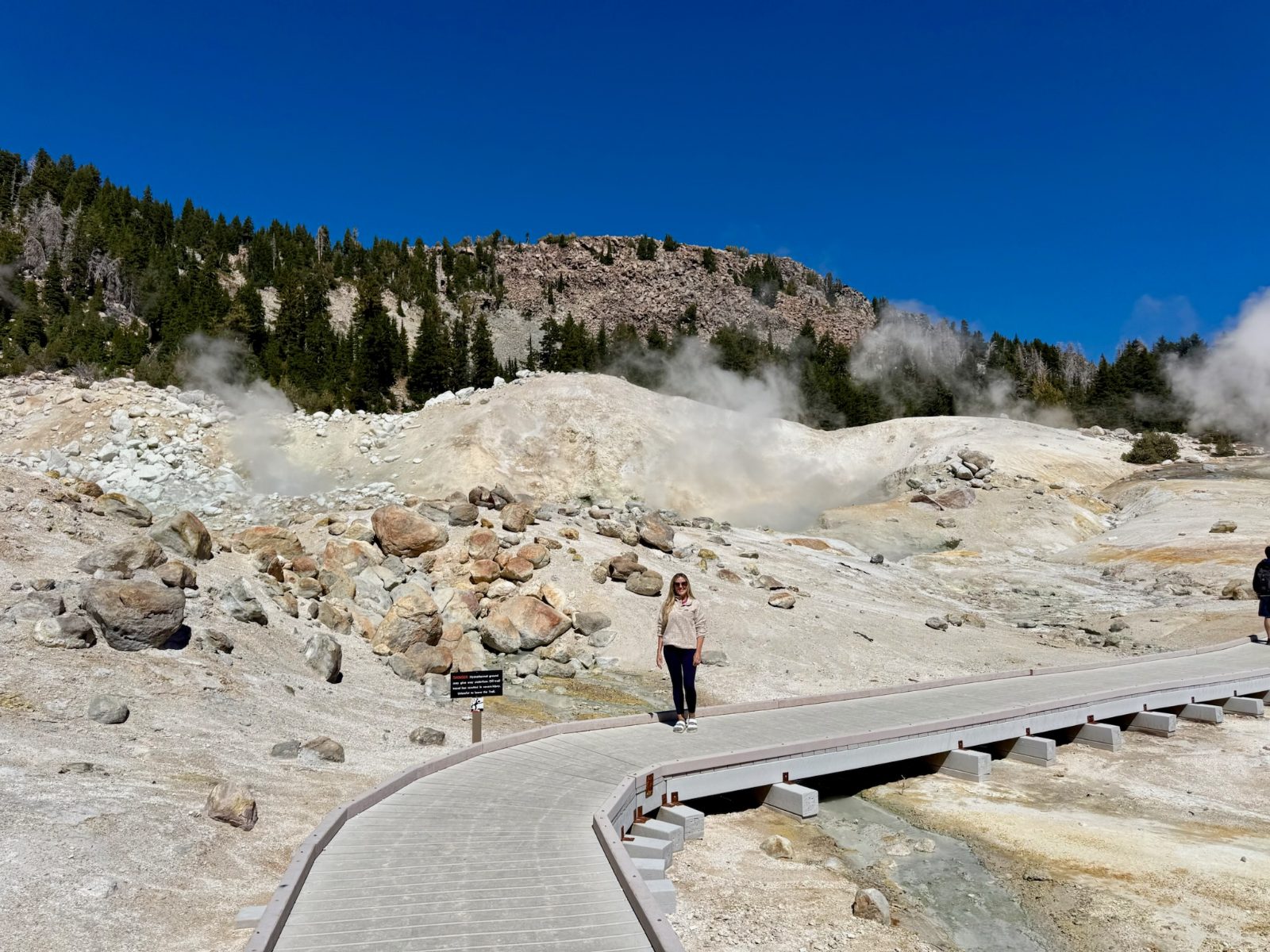
It is the largest hydrothermal area in the park, sixteen acres of it, and the biggest of its kind anywhere west of Yellowstone. You go down into it on a boardwalk, and the boardwalk is not there for your comfort.
 Photoassets/lassen-boardwalk.jpeg
The man it is named after lost a leg here
Bumpass Hell is named for Kendall Vanhook Bumpass, a cowboy who found the place in the 1860s and started showing it to people. In 1865 he brought a newspaper editor out to see it.
While they were walking around, Bumpass broke through the thin crust and put his leg into a boiling mudpot. The mud sits at roughly 240 degrees Fahrenheit. The leg was scalded badly enough that it had to be amputated.
He is not the cautionary tale in the brochure. He is the man the place is named after, and he is the reason there is a boardwalk.
Account per the historical record of Kendall Vanhook Bumpass and the park's own Bumpass Hell trail guide.
Standing on that walkway, you can see exactly how it happened. The crust looks like ground. It looks like pale, dry, slightly crunchy dirt, the kind you would walk across without thinking about it for a second. In places it is a lid over water hot enough to cook you.
There are signs saying so. People still step off. Do not be one of them.
 Photoassets/lassen-bumpass.jpeg
The verdict
One-Time Visit
A whim, and it paid off completely.
We drove fourteen hours round trip for one afternoon in a park most people cannot place on a map, and I would do it again tomorrow.
Lassen is not crowded, it is not famous, and it does not have a single view that everybody has already seen on a calendar. What it has is a basin where the ground is visibly still working, and the strange distinction of being the only place you can stand and be within a few miles of all four kinds of volcano that exist.
One afternoon got us the thing we came for. Read the exhibit, drive the highway, walk down to Bumpass Hell, stay on the boardwalk, and drive home smelling faintly of sulphur. That is the trip.
Say yes when somebody asks you at six in the morning. Then check the box and go find the next one.